
Introduction
These two restored shields (PHOTOS TO BE ADDED) have been in the possession of the Stained Glass Repository, part of the Glaziers charity, who rescue glass in danger of being lost and seeks to find new owners who will cherish and care for the glass. These shields came from Bexhill so it would seem that Granny Hooke (born Elaine Oakden) probably passed them to the Repository during the 1980s/90s. The Repository contacted me after discovering our Oakden roots on the hooke.org.uk website. We agreed to take them back into the family and have them restored as they were in a fragile state.
The Name Oakden
The Oakden coat of arms is deeply tied to the name's geographic origins and shares a direct heraldic lineage with its prominent historical variant, Ogden.
Because the Anglo-Saxon surname translates from Old English (ac and denu) to mean "near an oak valley," the heraldic symbols heavily favor canting arms (visual puns on the family name).
The Shield & Heraldic Blazon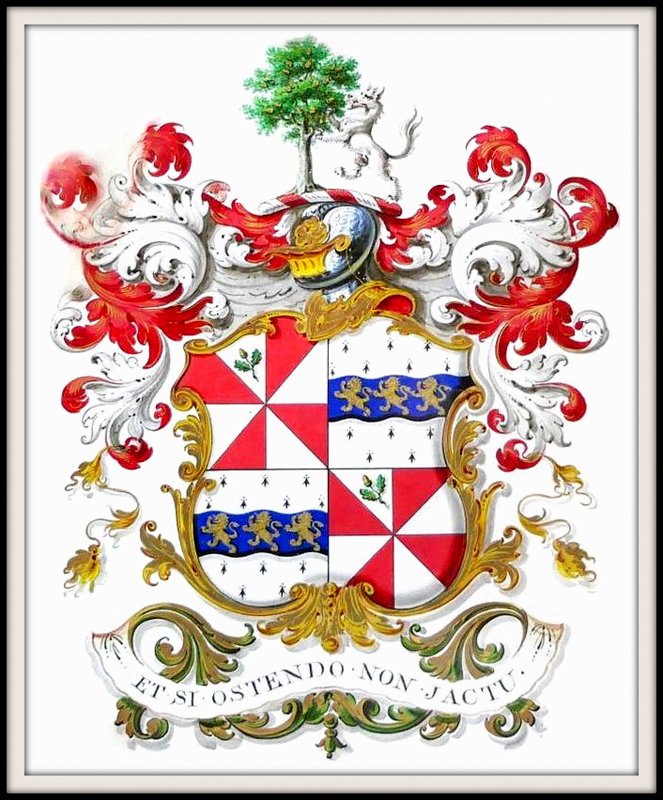
The historic coat of arms most commonly attributed to the Oakden (and Ogden) families features a distinct nature-focused layout:
• The Shield: A sable (black) field.
• The Fesse: A silver (argent) horizontal bar stretching across the middle of the shield.
• The Charges: The silver bar features six golden (or) acorns, flanked by three oak leaves.
• The Crest: A stag's head emerging between two oak branches.
• The Motto: Et si ostendo non jacto, which translates from Latin to: "And if I show, I do not boast".
Historical Origins & Shared Linage
The surnames Oakden, Okeden, and Ogden originated around the rugged borders of West Yorkshire and South Lancashire—specifically tracing back to a tiny hamlet north of Halifax and the parish of Rochdale.
Historically, these names were completely interchangeable. By the 17th century, identical coats of arms were formally granted to both John Oakden of Ladham House (Kent) and John Ogden. Another branch of the family firmly established itself in Staffordshire by the late 1500s, centered around the parish of Waterfall.
An interesting branch of the family's arms is also famously associated with the American colonies. King Charles II reportedly presented a version of these arms to a John Ogden, Esq. for his family’s unwavering loyalty to King Charles I during the English Civil War, right before the family emigrated to establish settlements in Long Island and New Jersey.
The evolution of the Oakden name splits into two primary, highly detailed heraldic narratives: the Staffordshire to Kent lineage in England, and the American immigrant branch (which primarily adopted the Ogden spelling).
Left: Oakden Wine Label

1. The English Lineage: Staffordshire to Kent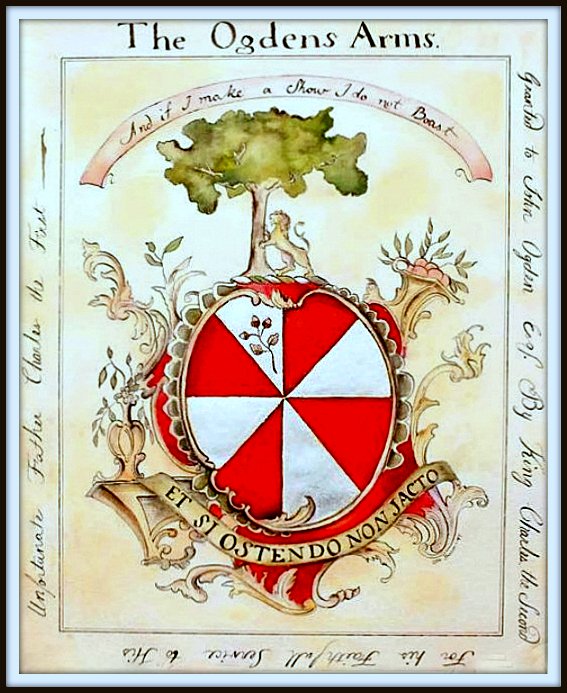
This branch showcases how a single family line maintained a continuous heraldic identity as they transitioned from rural clergy into prominent southern landowners.
• The Staffordshire Roots (1500s–1700s): The earliest verified heraldic ancestor of this specific line was Edmund Okeden (1570–1642), who served as a church incumbent in the remote rural parish of Waterfall, Staffordshire. For generations, the family remained rooted in this area (including nearby Cauldon and Waterhouses), eventually accumulating enough wealth for Ralph Oakden to build Lee House Farm in 1751.
• The Move to Kent (1800s): The family's social standing shifted significantly when Ralph Oakden (1806–1885) relocated the lineage south to Goudhurst, Kent. They established themselves at Ladham House, cementing their status as country gentry.
• The Ladham House Arms: It was during this period of high status that the official English arms for Oakden of Ladham House were formally recorded. They dynamically displayed the black shield, silver fesse, and golden acorns—identical to the original Lancashire/Yorkshire roots—proving a proud preservation of their northern heritage.
• Later Distinction: This branch eventually produced Sir Ralph Oakden (1871–1953), who achieved significant prominence in the British Indian Civil Service, representing the apex of this branch's traditional colonial and civic influence.
Bottom Picture: Oakden Memorial Window
2. The American Immigrant Branch: The "King Charles" Legend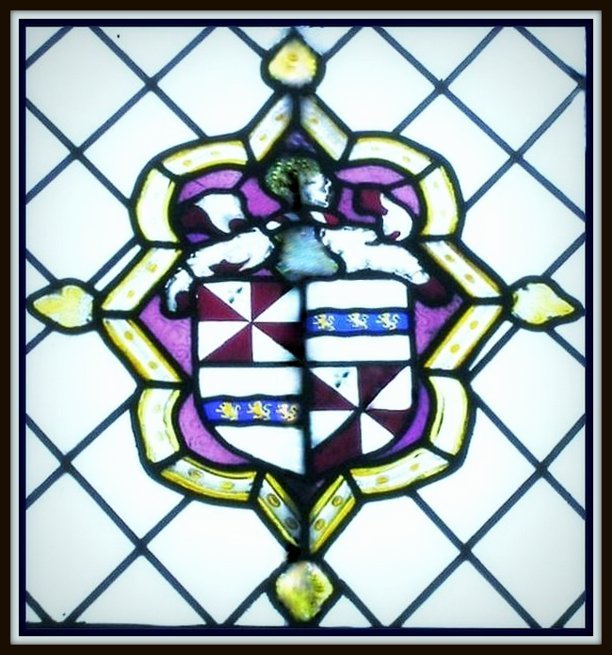
The American branch transitioned entirely to the Ogden spelling but carried a highly dramatic, historically famous claim to their coat of arms.
• The Royal Gift: According to long-standing American family records, the arms were explicitly presented to John Ogden, Esq. by King Charles II. This royal recognition was allegedly given in gratitude for the Ogden family's fiercely "faithful service to his unfortunate father, King Charles I," during the bloody years of the English Civil War.
• The Settlement of New Jersey: Shortly after the Restoration of the monarchy, John Ogden and his brother Richard sailed from Southampton to the New World. Landing on Long Island, John became a monumental historical figure in colonial America. He went on to serve as a magistrate and became a primary founder of Elizabeth, New Jersey.
• The US Homesteads: From New Jersey, branches settled in Fairfield, Connecticut, where the historic Ogden Homestead still stands as part of the Connecticut Historical Trust. The American branch proudly displayed the exact same arms (six golden acorns on a silver bar) on their family seals, validating their royal connection in the New World.
Return to: The Oakdens - An Overview